
EDTA Cu
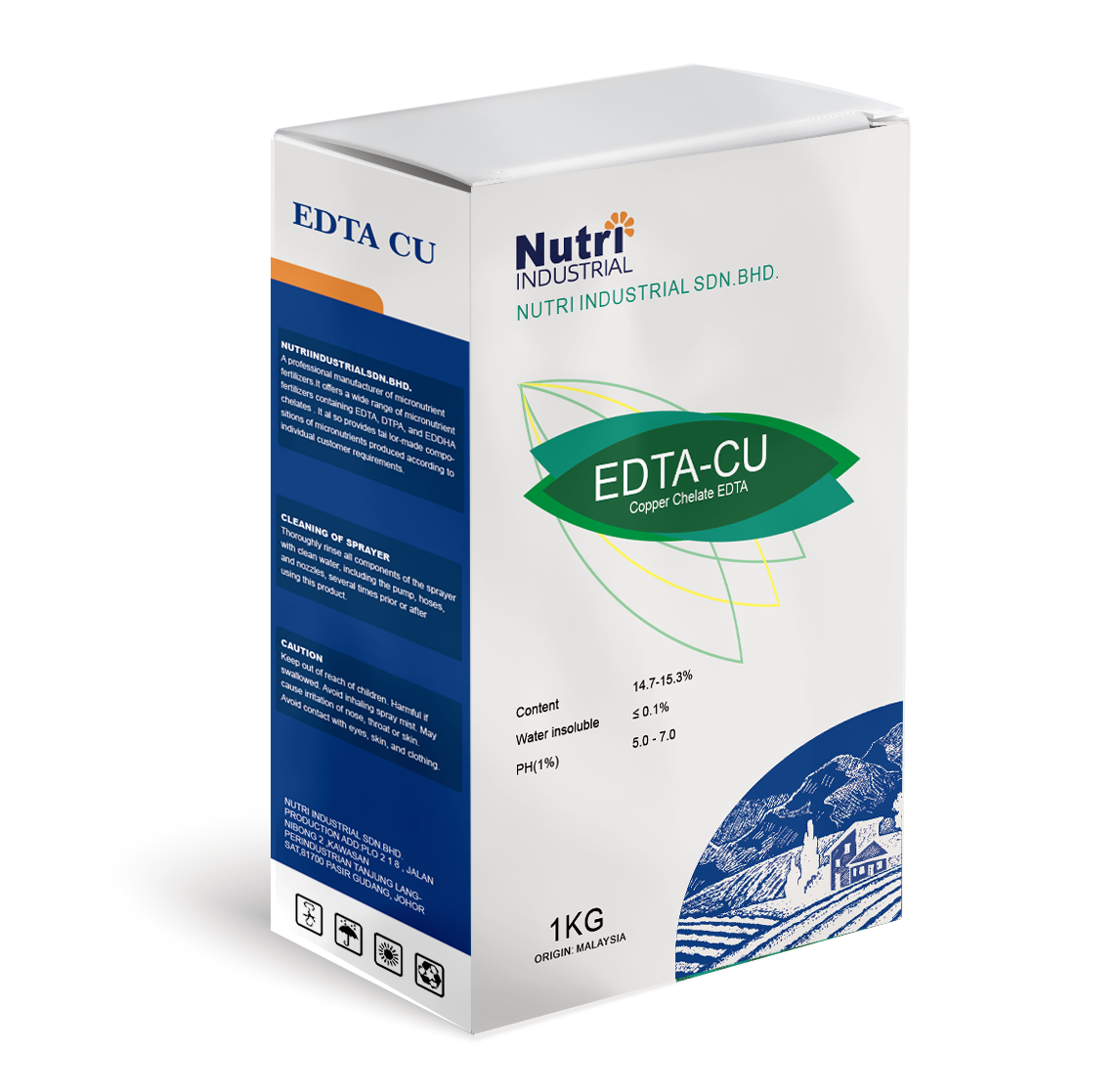
Product: EDTA Cu
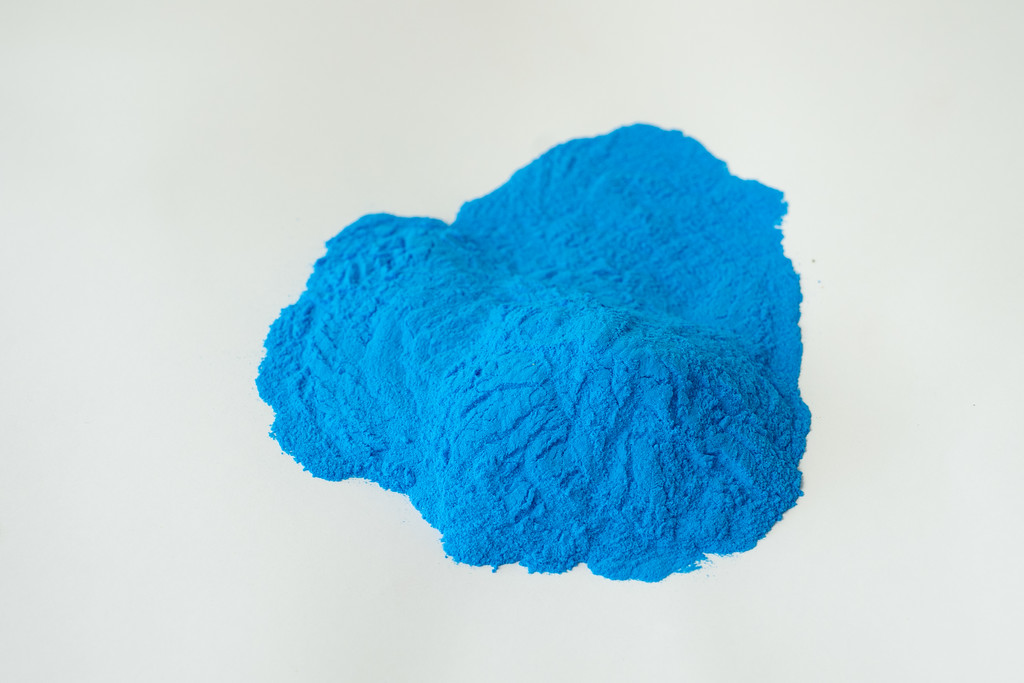
Appearance: Blue powder
Content: 14.5–15.5% Cu
pH (as 1% solution): 5–7
Water insoluble matter: ≤ 0.1%
Copper is a critical micronutrient for photosynthesis, enzyme activity, and lignin synthesis in plants. EDTA Cu chelates copper, ensuring rapid and efficient uptake by plants, and offers high stability, especially in conditions with pH imbalances and soil-binding issues.
Key Advantages
- High bioavailability: Rapid uptake by leaves and roots thanks to the EDTA chelate.
- Stable in a wide pH range: pH 5–7 in a 1% solution.
- Homogeneous dissolution, low residue: Water-insoluble matter ≤ 0.1%.
- Plant health: Increases photosynthesis efficiency and supports enzyme systems.
- Disease resistance: Contributes to lignin synthesis, strengthening plant tissues.
- Flexible use: Suitable for drip irrigation (fertigation) and foliar application.
When to Use?
- Signs of copper deficiency (yellowing of young leaves, curling, weak shoot development, reduced flowering)
- Insufficient uptake due to Cu binding in high-pH or organic matter-rich soils
- Improving quality and resistance in fruit trees, vineyards, and vegetables
Areas of Use and Recommended Applications The following doses are general recommendations; adjust the product according to the crop, climate, phenology, and soil/water analysis. It is recommended to perform a trial on a small plot.
Drip Irrigation (Fertigation)
- Vegetables, fruit trees, vineyards: 0.5 – 1.5 kg/ha/application, every 10–14 days.
- Greenhouse production: 100 – 300 g/da/application.
Foliar Application
- General range: 100 – 200 g / 100 L of water.
- Trees/vineyards: 0.1 – 0.2% (100–200 g/100 L), every 10–14 days before flowering and throughout shoot development.
- Vegetables: 0.1 – 0.15% (100–150 g/100 L), every 10–14 days from vegetative growth to flowering.
Warning: Avoid foliar application in high temperatures (≥28–30°C) and under intense sunlight.
Miscibility and pH
- Generally compatible with most macro and micronutrients in the appropriate pH range.
- Do not mix at high concentrations in the same tank with solutions containing phosphate and sulfate; precipitation may occur.
- Avoid mixing with strong alkaline products (pH > 8.5). Always perform a jar test.
Application Tips
- Copper is an immobile element within the plant; regular and early application is recommended.
- There may be a risk of phytotoxicity at excessive doses; do not exceed the label doses.
- It can accumulate in the soil over a long period, so it should be used based on analysis results.
Packaging and Storage
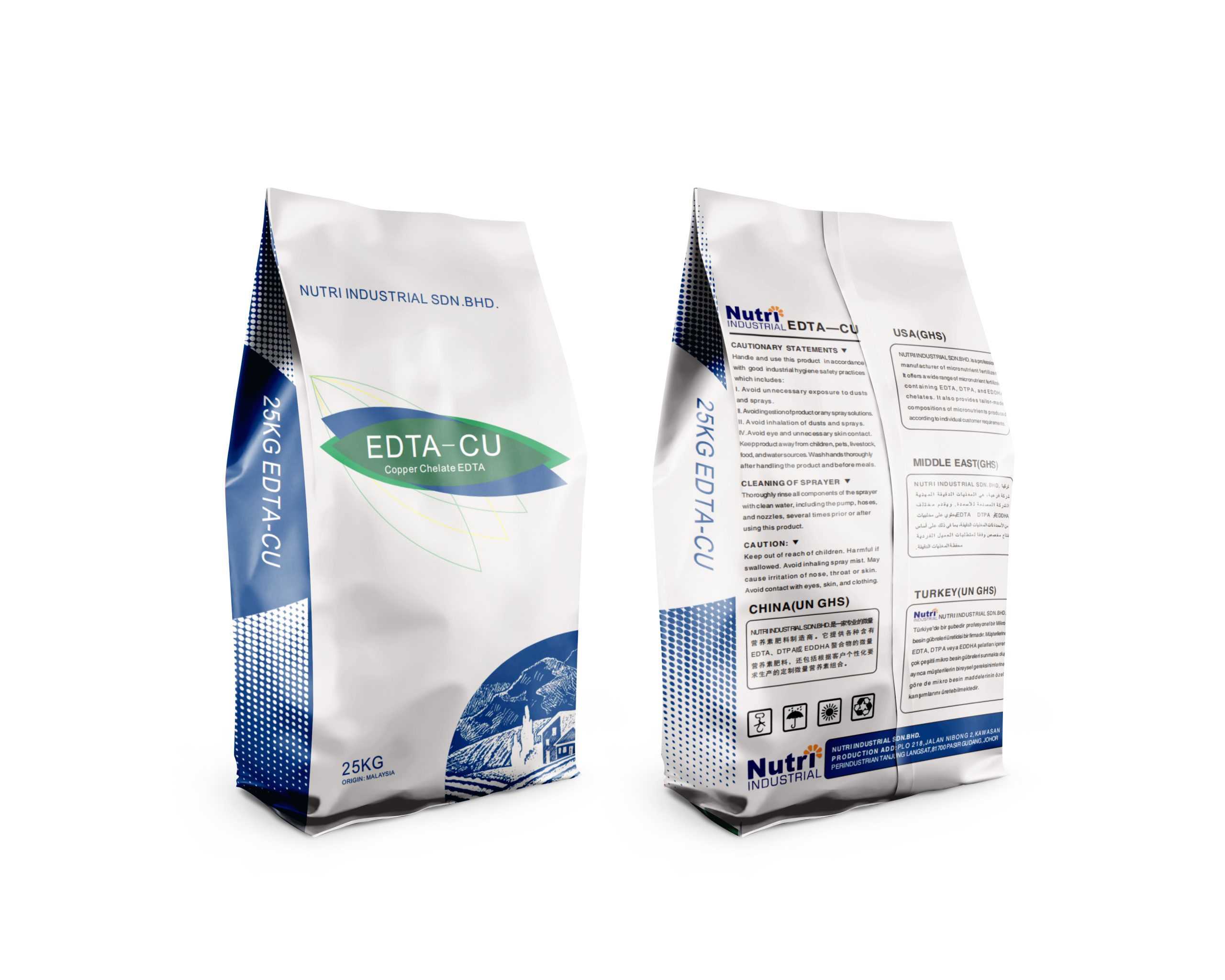
- Packaging: 1 kg, 5 kg, 10 kg, 25 kg multi-layer kraft bag or PE packaging.
- Storage: Store in a cool, dry, and dark place in its original, sealed packaging.
- Shelf life: 2 years from the production date under proper conditions.
Safety
- Use gloves, goggles, and appropriate equipment during application.
- Keep away from children and foodstuffs. Use the product only as instructed.
FAQ — Frequently Asked Questions
- Can EDTA Cu replace copper sulfate? The purpose is different: Copper sulfate is generally a fungicide or a plain copper source; EDTA Cu provides chelated, highly absorbable copper and is specifically aimed at correcting deficiency through foliar/fertigation application.
- Can I use it in water with a pH above 7? Yes; thanks to the chelated form, solubility and uptake continue. It is beneficial to keep the tank pH around 5.5–6.5.
- Does it cause harm if used excessively? Yes; copper can cause phytotoxicity at excessive doses. Do not exceed the recommended doses.